

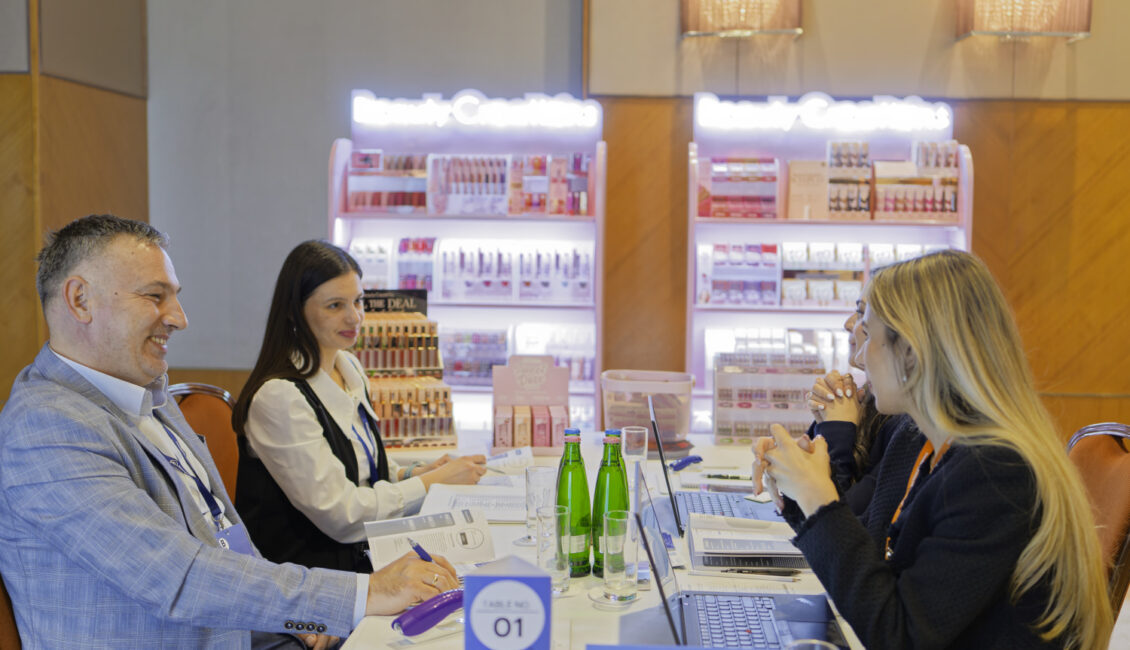
A strong product may open the door, but buyers still need evidence that it belongs in the category, can perform commercially and will be supported by a dependable supplier.
A buyer can like a product and still decide not to list it. That is the tension many FMCG suppliers underestimate. The sample may be impressive, the packaging polished and the brand story memorable. None of that, on its own, answers the questions a retail buyer has to take back to the wider business.
Where will the product sit in the assortment? Which shopper needs it served? What margin can it deliver? How will the supplier create demand, fulfil orders and respond if the launch does not go to plan?
Product quality earns attention. What moves the conversation forward is a credible case for why the product should be listed by this retailer, in this market, at this moment.
The first decision is about the category, not the sample Every new SKU enters an existing system. In a physical store, shelf space is finite. Online, the range may be wider, but shopper attention, promotional visibility and category-management time are still limited. To make room for one product, a buyer may need to reduce or remove another. A new listing therefore has to justify the space it takes.
This is why a product story has to become a category story. “Premium quality”, “natural ingredients” and “innovative formula” may describe the product, but they do not explain why this retailer needs it now.
A convincing answer connects the product to a recognisable opportunity. A smaller pack might create a new impulse occasion. A family format may improve value perception. A food product could serve an unmet dietary need, while a personal-care product might offer a clearer solution for an overlooked shopper group. The point of difference has to create value beyond novelty.
A persuasive supplier presentation does not stop at what the product is. It shows what the product can do for the retailer’s business.
Buyers notice quickly when a presentation has been prepared for “retail” in general rather than for their business. A supplier may know the brand inside out and still lose credibility by showing little understanding of the retailer’s format, positioning or customer.
Good preparation is visible in the details. The supplier has studied the current assortment, understands the main price tiers and knows which brands, claims and pack sizes dominate the category. They have considered the strength of private label, the balance between stores and e-commerce, and whether the proposition needs to change across markets.
The commercial story for a discount chain should not sound identical to the story for a premium department store. An online retailer may care about search visibility, product content and fulfilment in ways that differ from a regional supermarket. A product positioned as suitable for “everyone” usually leaves the buyer to do too much of the strategic work.
Timing also matters. Category reviews, range resets and seasonal buying windows differ between retailers. Suppliers do not always need to know the full calendar before the first conversation, but they should be ready to ask about it. A relevant product can still miss its opportunity if it arrives at the wrong point in the buying cycle.
The commercial story has to work on paper
Enthusiasm can earn a second look. The numbers determine whether the opportunity is workable.
A buyer needs a clear view of wholesale cost, recommended retail price, expected margin, case configuration, minimum order quantities and the additional costs that may affect the model. The will also want to understand how the product is expected to perform: likely rate of sale, target channels, repeat-purchase potential and the assumptions behind the forecast.
Established suppliers can draw on sales velocity, repeat rates and results from comparable retailers or markets. A younger brand may not have national data yet, but it can still bring useful evidence: a regional pilot, e-commerce performance, independent-store sell-through, customer research, repeat orders or a well-designed sampling programme.
What matters is not the size of the number on the slide. It is whether the supplier can explain where that number came from. A modest forecast with transparent assumptions is more useful than an ambitious projection that falls apart under the first follow-up question. Where evidence is still limited, a controlled trial with agreed success measures can be a stronger proposal than an
unrealistic full rollout.
The buyer is ultimately asking whether the product can create profitable growth rather than simply move sales from one existing SKU to another. Suppliers who can answer that question clearly move the conversation away from personal opinion and towards a business case.
A listing is the beginning, not the finish line
The real test begins when the product reaches the shelf and shoppers have the chance to choose it.
Retailers need products that sell through. That makes the supplier’s launch plan part of the commercial discussion, not a marketing detail to be added later. “We will support the launch on social media” is rarely enough. The buyer needs to understand which audience the supplier can reach, in which markets, through which channels and with what level of commitment.
Depending on the product and retailer, the plan might include sampling, introductory promotions, retailer-specific content, creator partnerships, PR, paid media, CRM activity or in-store support. There is no universal formula. The important thing is to show how awareness is expected to become trial, and how trial could turn into repeat purchase.
Strong suppliers also discuss what happens if performance is slower than expected. Who will monitor the data? How quickly can the activity be adjusted? What additional support is realistic? Treating sales velocity as a shared responsibility shows that the supplier is thinking beyond thefirst purchase order.

A productive first meeting creates confidence in both the opportunity and the people behind it.
Retail readiness belongs in the pitch
A buyer’s interest can disappear quickly when the business behind the product is not ready to trade. Retail readiness lives in the details. Depending on the product, retailer and market, a supplier may need GS1 identifiers and scannable barcodes, accurate product data, compliant labels and claims, category-specific documentation or certifications, appropriate insurance, sufficient production capacity, confirmed lead times and shelf life, case and pallet information, minimum
order quantities, logistics coverage and a clear distribution model.
The requirements vary by category and market. In the European Union, food placed on the market must meet applicable food-information rules, including allergen labelling, while relevant food-business operators are subject to traceability obligations. Cosmetic products placed on the EU market are subject to product-safety, notification, labelling and claims requirements.
Retailer-specific standards may add further obligations. Suppliers should clarify which rules apply, and who is responsible for meeting them, before a listing progresses.
Capacity deserves the same honesty. A supplier that can serve 100 stores reliably may be a better partner than one that promises 5,000 and then struggles to fill orders. If a national rollout is not yet realistic, a regional launch or controlled pilot can demonstrate both ambition and sound judgement.
Accurate product information matters before the meeting as well as after it. A buyer may first encounter the product through a profile, sell sheet or digital sourcing system. Missing dimensions, unclear claims, inconsistent product names or weak imagery create friction before the buyer has even handled a sample. Packaging still has to attract attention on the shelf, but the information surrounding it has to work just as hard.
The buyer is also assessing the company
FMCG partnerships are rarely frictionless. Forecasts change. Artwork needs revision. Orders accelerate or slow down. A document is requested at short notice. A delivery is delayed. Buyers know they will eventually see how a supplier behaves when the situation is less polished than the first presentation.
Trust is built through predictable behaviour: being clear about capacity, explaining the assumptions behind a forecast, raising risks early and meeting follow-up deadlines. Preparation sends an early signal. So do realistic commitments and prompt, complete answers.
The most credible supplier representatives combine energy with discipline. They are enthusiastic about the product without exaggerating its potential. They know their numbers, admit what they still need to confirm and return with the answer when promised. Just as importantly, they listen.
A buyer meeting should feel like a commercial conversation, not a rehearsed deck delivered regardless of the questions in the room.
Personal chemistry can help, but it cannot replace competence. What gives a buyer confidence is the sense that the supplier will be straightforward to work with once the real operational relationship begins.
A useful meeting ends with a clear next step
A first meeting does not need to resolve every issue. It does need to create enough relevance, clarity and confidence to earn the next conversation.
The opening should establish the essentials quickly: what the product is, who it serves and why it belongs in this retailer’s assortment. The commercial case and supporting evidence should follow. Operational readiness and launch support should be part of the story, not information the buyer has to uncover through repeated questions.
Suppliers also need to leave room for the buyer’s perspective. What is the retailer prioritising in the category? Which concerns might prevent the product from progressing? What information is needed for an internal review? Is the right next step a sample, a pricing file, a technical document, a test proposal or another conversation with a wider team?
“Let’s stay in touch” is not the next step. A useful meeting ends with a specific action, a clear owner and a realistic date.

Trust grows through clear expectations and a practical next step
Before your next buyer meeting
Before walking into the room, a supplier should be able to answer six questions without relying
on vague claims:
- Where does the product fit in this retailer’s current assortment?
- Which shopper need or category gap does it address?
- What evidence suggests that shoppers will buy it and buy it again?
- How does the retailer make money from the product?
- What will support awareness, trial and repeat purchase after launch?
- Can the business meet the retailer’s operational, regulatory and data requirements?
If one of those answers is still unclear, that is where the preparation should begin.
Beyond a great product
Retail buyers are searching for products shoppers will want, but they are also managing risk. They need commercial logic, operational readiness and a supplier they can trust to deliver. A strong product opens the door. A well-prepared supplier gives the buyer a reason to keep it open.
What participants say about Stamegna Retail Management,
The same principles shape a productive sourcing event: relevant meetings, commercial focus and conversations that can lead somewhere. Here is how participants have described their experience with Stamegna.
TRUSTPILOT REVIEW
“Every year, we discover truly innovative brands, resulting in at least one or two long-term
partnerships…”
Khurelbaatar Lkhagvasuren, Buyer, Hong Kong
TRUSTPILOT REVIEW
“I really value curated meetings that are relevant and commercially focused…”
Lucy, United Kingdom
5/5, 2 March 2026
TRUSTPILOT REVIEW
“Productive meetings, beautiful environment and an overall very positive experience!”
Zsófia, Hungary
5/5, 26 February 2026
TRUSTPILOT REVIEW
“I had a very positive experience attending the Stamegna event held at the Hilton Hotel in Kuala Lumpur (April 2026). The venue itself set a professional and comfortable tone for the gathering, creating an ideal environment for meaningful discussions and engagement.
What stood out most to me was the quality of the suppliers involved. Each came across as credible and well-prepared from Europe, Asia and Africa. These are the very suppliers we are seeking for in the areas of cosmetics, skin care and fragrance.
I was also impressed by how well prepared and organized the event was. From registration through to the flow of the sessions, everything ran smoothly. The agenda was well thought out, time was managed efficiently, and transitions were seamlesss.”
Shelldon Jagdon
5/5, 27 April 2026
STAMEGNA RETAIL MANAGEMENT
Ready to move the conversation forward? Stamegna events bring international buyers, distributors and suppliers together for focused, pre-scheduled meetings across Food & Beverages and Health, Beauty & Care. Explore upcoming Stamegna events.